
INTERNATIONAL
CONFEDERATION
OF EUROPEAN
BEET GROWERS



At 372 EUR/tonne in February 2018, the EU average white sugar price is currently at its lowest level since the establishment of the European Commission Price Reporting System in July 2006, and down by more than 25 per cent since August 2017. It is almost ten per cent below the white sugar reference threshold, the only objective benchmark that exists to monitor the health of the sector. And it is far below EU average production costs.
The vote today at the SCoPAFF to ban neonicotinoids, including in pelleted beet seed, is a severe blow for sugar beet growers and for the sustainability of the EU beet sugar sector. It is not a science-based decision as far as sugar beet is concerned. It is highly regrettable that a majority of Member States have ignored the data gaps in the EFSA assessment and the recent evidence put forward. As a result, both the environment and the farming community will be negatively affected.
Das von der Europäischen Union heute beschlossene Verbot des Einsatzes von Neonicotinoiden auch als Beizwirkstoff trifft den Zuckerrübenanbau in gravierendem Maße. „Damit nimmt man uns künftig die Möglichkeit eines besonders gezielten Pflanzenschutzes. Der Biodiversität hilft diese Entscheidung nicht. Nun zwingt man uns wieder zu wiederholten Flächenapplikationen“, so Bernhard Conzen, Vorsitzender des Rheinischen Rübenbauer-Verbandes (RRV).
Künftig dürfen keine neonicotinoiden Wirkstoffe mehr im Freiland verwendet werden. Dies hat die EU-Kommission in ihrer heutigen Sitzung beschlossen. Damit fehlen künftig wichtige Wirkstoffe für die Beizausstattung von Zuckerrübensaatgut.
Mit dem heutigen Beschluss der EU-Mitgliedsstaaten, den Einsatz von Neonicotinoiden ab dem Jahr 2019 zu verbieten, ist der Anbau von Zuckerrüben in Österreich massiv gefährdet.
Different sessions will tackle:
➡️Crop protection & Innovation
➡️Weed control
➡️Beet seed
➡️Carbon farming
This year, TRCC will be held in parallel with the Potato Europe 2026 & Sugar Beet Expo 2026. An opportunity for all the actors to meet!


The Mercosur agreement does: NOT ensure fair competition for EU farmers, NOT prioritise consumer protection, NOT include strong safeguards to protect the environment.
✅Ensure productivity gains & competitiveness💪
✅Protect growers from unfair competition⚖️
✅Ensure resilience to rising risks🦠📉
✅Support innovation🧬
2025 will be Congress year! European sugar beet world will meet in Rotterdam from 11 to 13 June.

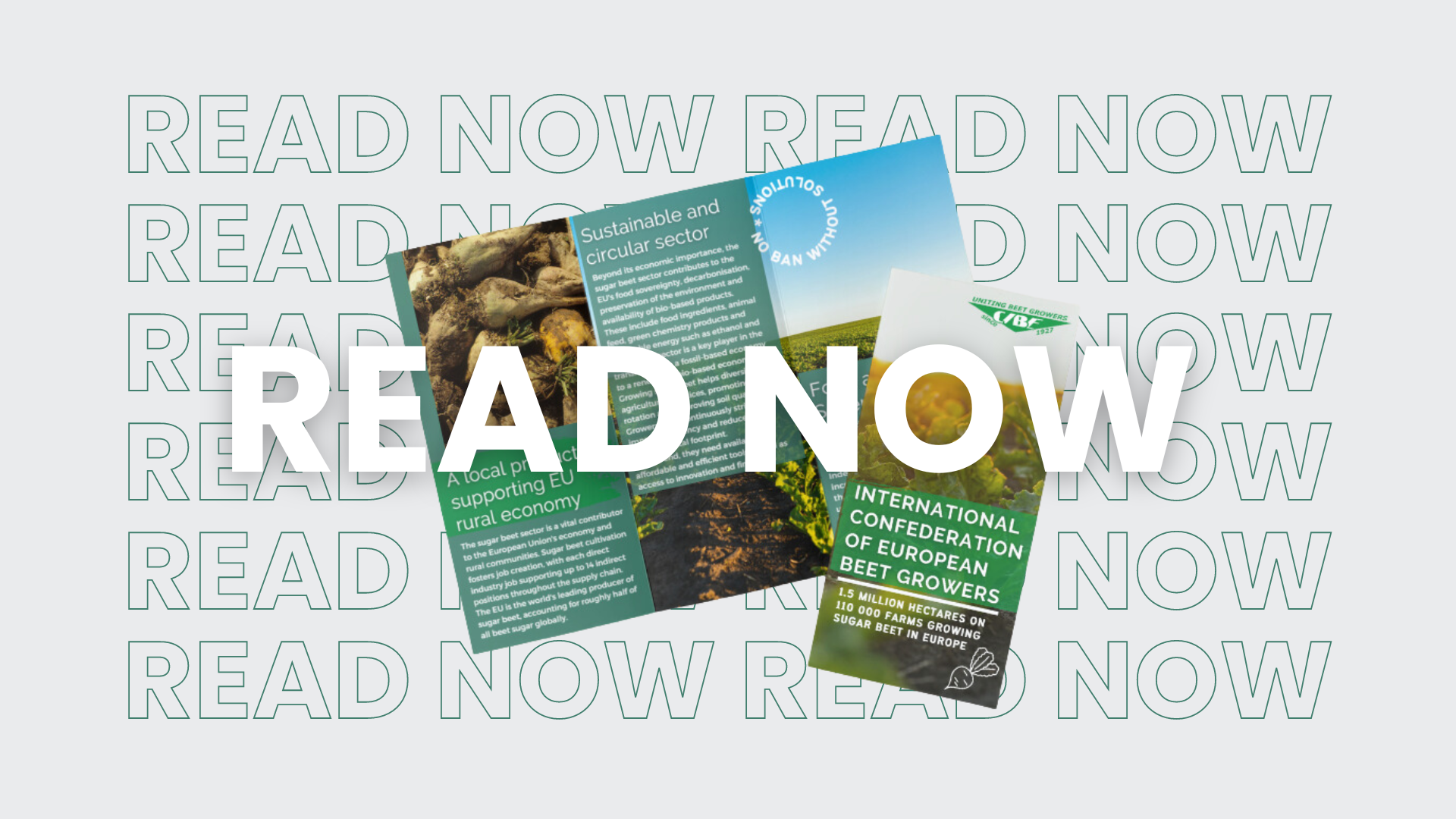
Read our new brochure highlighting the importance of sugar beet local production in Europe !
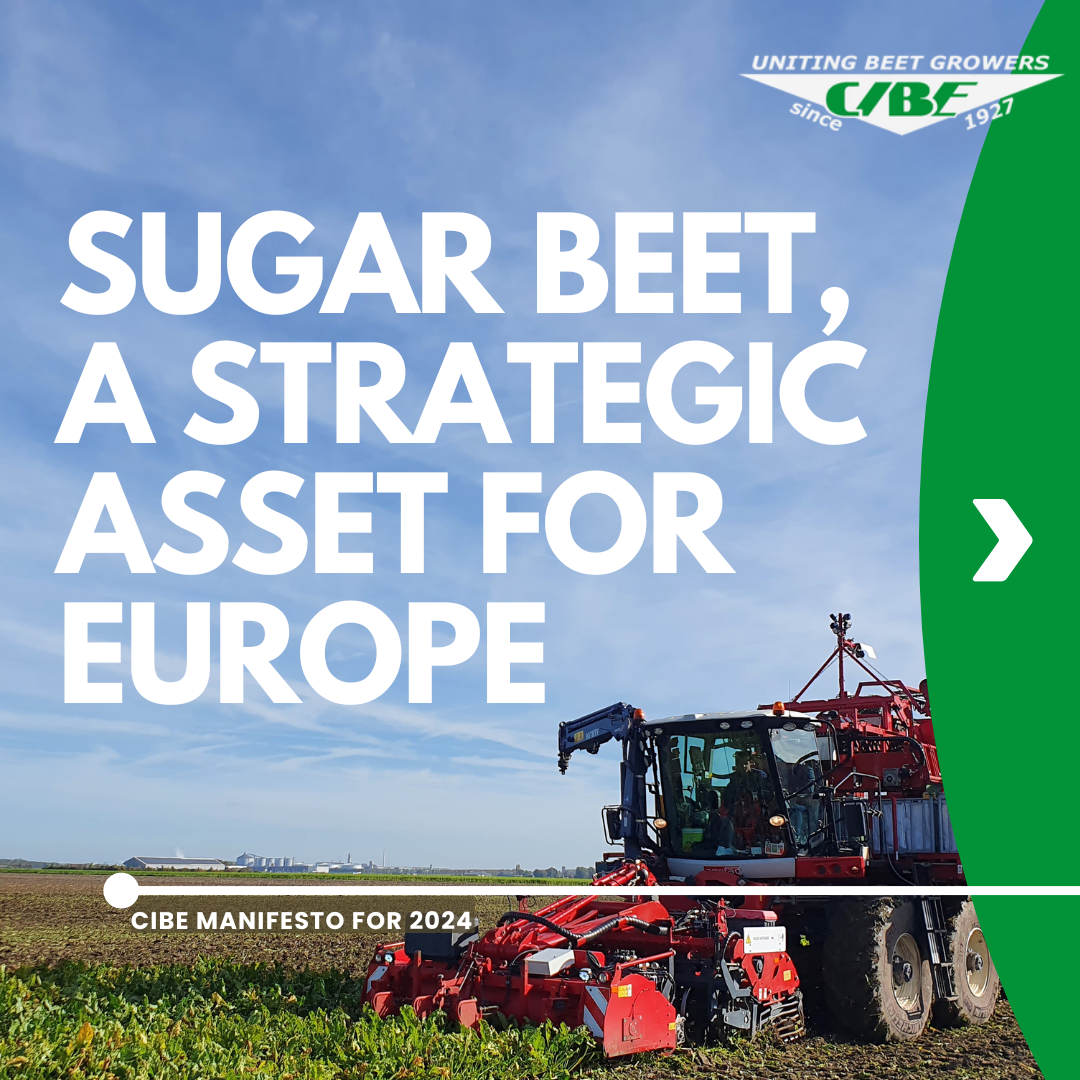
Discover our Manifesto ahead of 2024 European elections!
Let's work together to restore European agriculture's ambition. The voice of sugar beet growers is outlining 4 priorities:
See how the beet sugar sector is working hard to develop sustainable alternatives to respond to the ban of some key plant protection products.
Such alternatives will most likely have to consist of a combination of techniques and approaches. To develop and successfully implement these will require time, several years and considerable financial investment.
Do you want to know more about sugar beet? Follow our e-campaign #FollowTheBeet on Twitter.

.png)
In October 2013, the European beet growers (CIBE), sugar producers (CEFS) and trade unions of the food and agriculture sector (EFFAT) have formalised a landmark agreement to jointly highlight and report on representative Good Practices of sustainable production of beet sugar in the EU.
CIBE takes part in the AgroCycle project, a Sino-EU collaborative research venture, funded by the European Commission under its Horizon 2020 programme to create a protocol for the implementation of the 'circular economy' across the agri-food sector.


